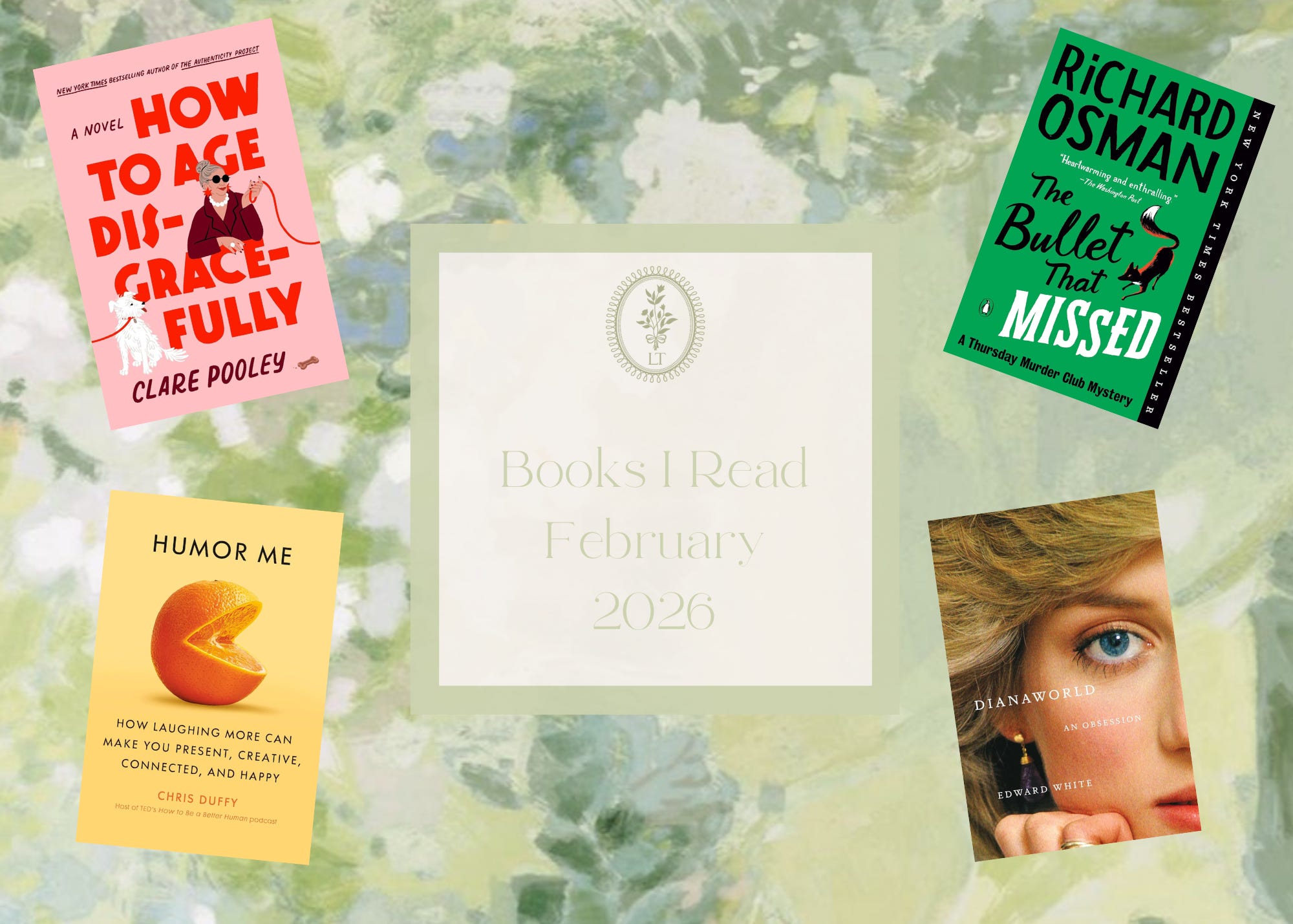
If February had a thesis, it was this: aging is not a slow fade — it’s a sharpened edge.
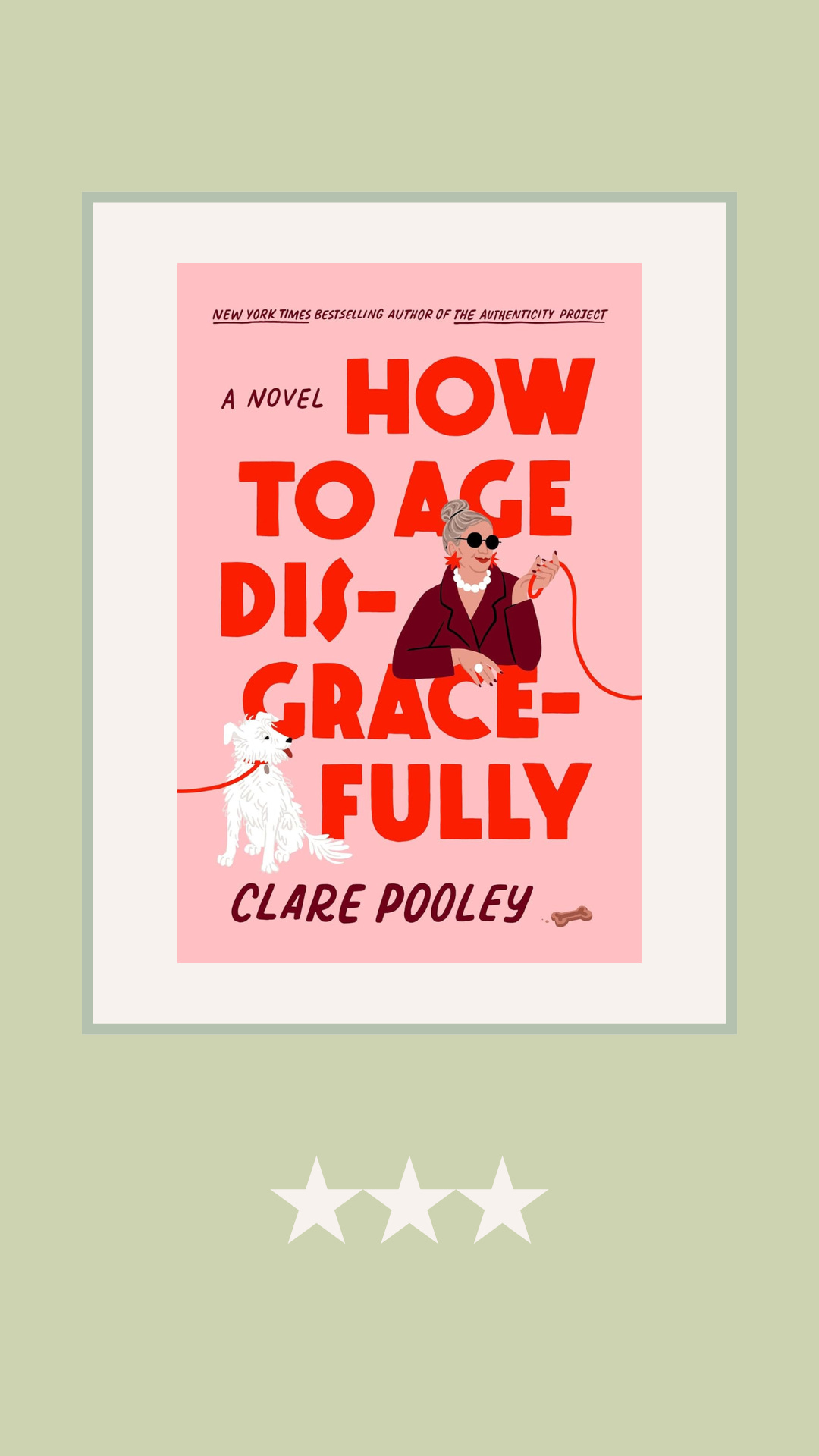
My month began with a Libby hold I had been waiting on for eons: How to Age Disgracefully by Clare Pooley. I adore Pooley, so my anticipation was high — perhaps too high. I’ll admit, I nearly gave it two stars. At times the antics of her septuagenarian cast felt slightly overworked. But then I reached her author’s note — her insistence that she wanted to write older characters who are not bumbling, not helpless, not background noise — and something shifted. The novel became less about plot mechanics and more about reclamation. Aging, in her hands, is mischievous and strategic and very much alive.
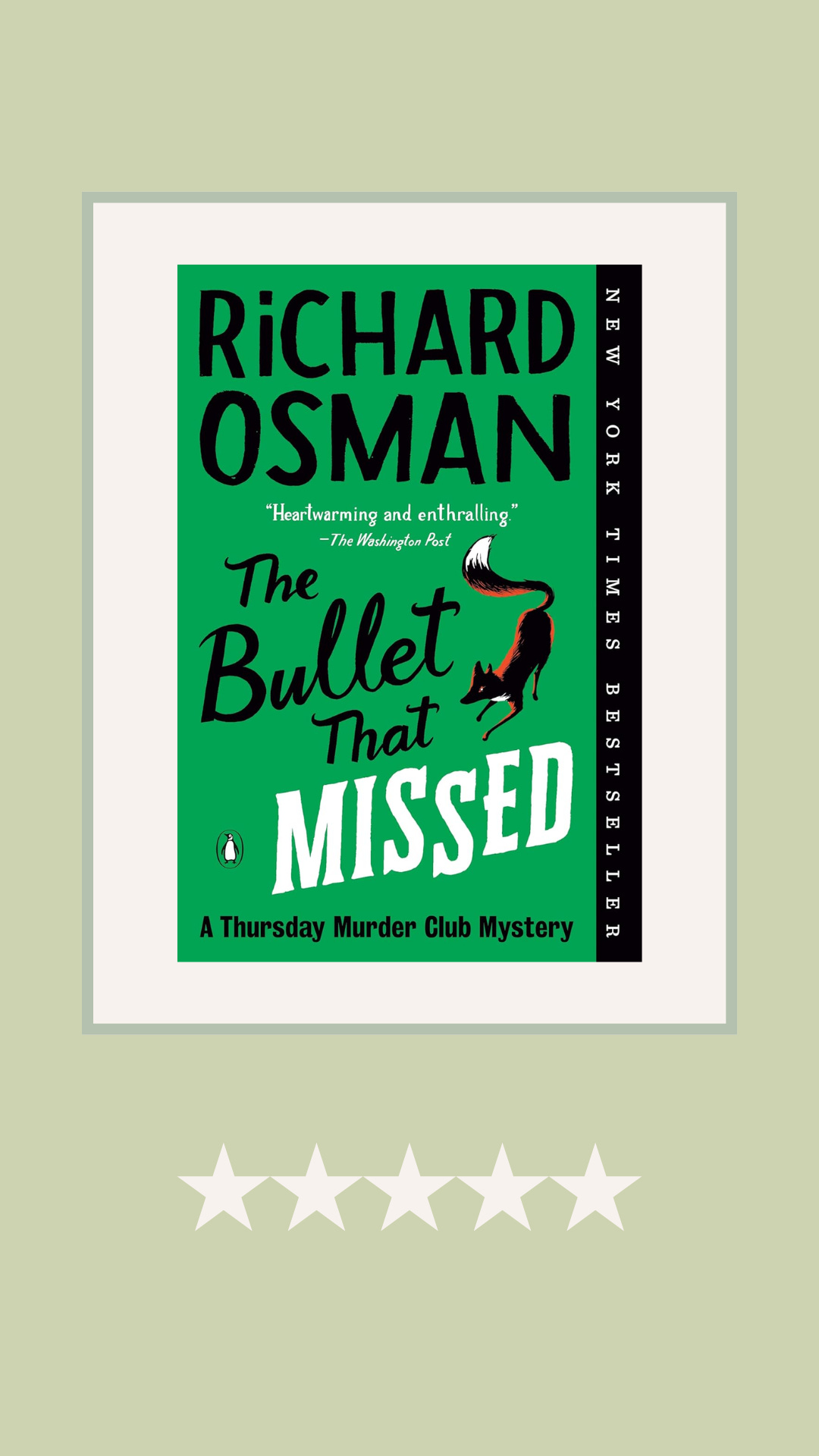
That theme echoed beautifully as I revisited my favorite fictional retirees in The Bullet That Missed by Richard Osman — the third installment in The Thursday Murder Club. This series remains one of my absolute favorites I’ve ever discovered. Equal parts mystery and meditation on aging, Osman’s characters are charming, amusing, and quietly profound. They solve cold cases, yes — but they also wrestle with loss, relevance, loyalty, and time. Each return to Coopers Chase feels like a warm hug and cuppa.
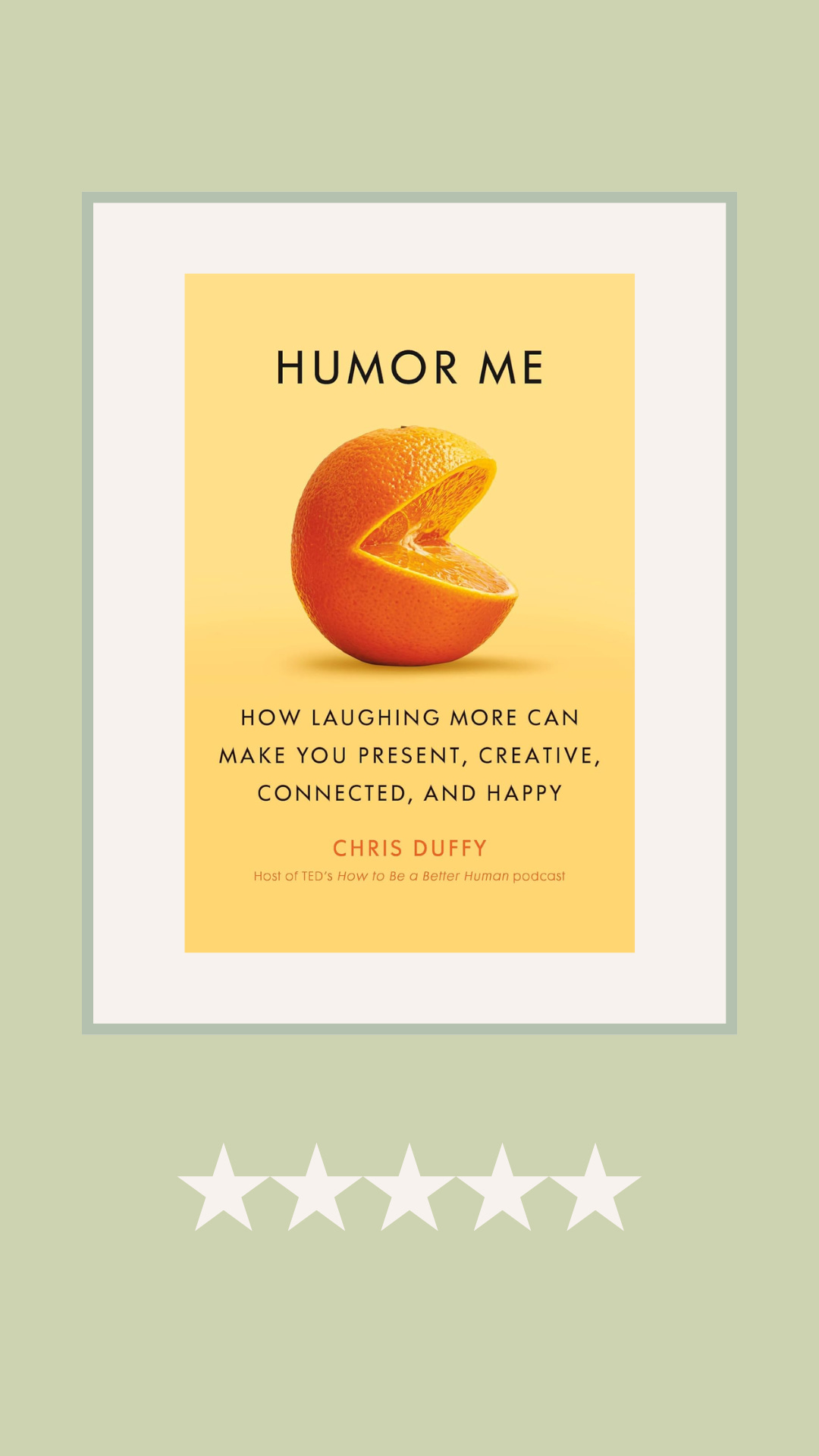
Nonfiction joined the conversation, too. Humor Me: How Laughing More Can Make You Present, Creative, Connected, and Happy by Chris Duffy explores the scientific basis of humor and the measurable ways laughter benefits us personally, professionally, and intellectually. What lingered with me most wasn’t a punchline, but a posture: humor as noticing. Humor as curiosity. The simple act of listening more closely — even to the stranger across from you on a subway — as a pathway to connection. In a month so centered on aging, this felt like an instruction manual for staying nimble: remain curious, remain amused, remain open.
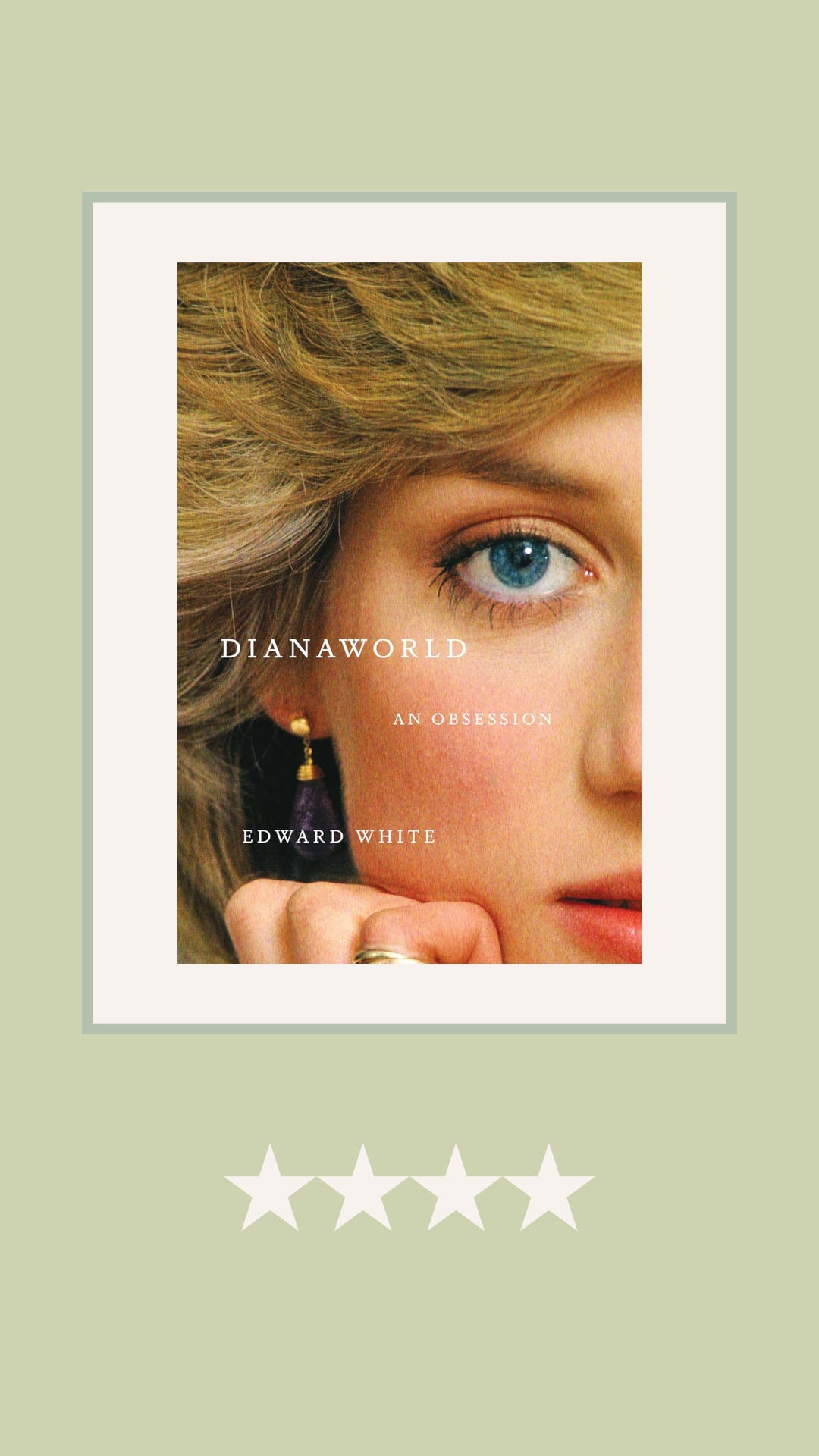
And then there was Dianaworld: An Obsession by Edward White — unflinching, occasionally contrarian, and deeply analytical in its study of Princess Diana. At times the critique feels almost differently critical for the sake of it, but that tension is part of the point. The book is less a straightforward biography and more an examination of obsession — how a single woman became a cultural mirror for longing, grievance, romance, and myth. For a Royal enthusiast, it’s rich with factual (and occasionally theoretical) nuggets. But beyond that, it’s about narrative — who controls it, who projects onto it, and what survives when the person at the center is gone.
Without further adieu, here are the rankings for the books I read in February 2026.