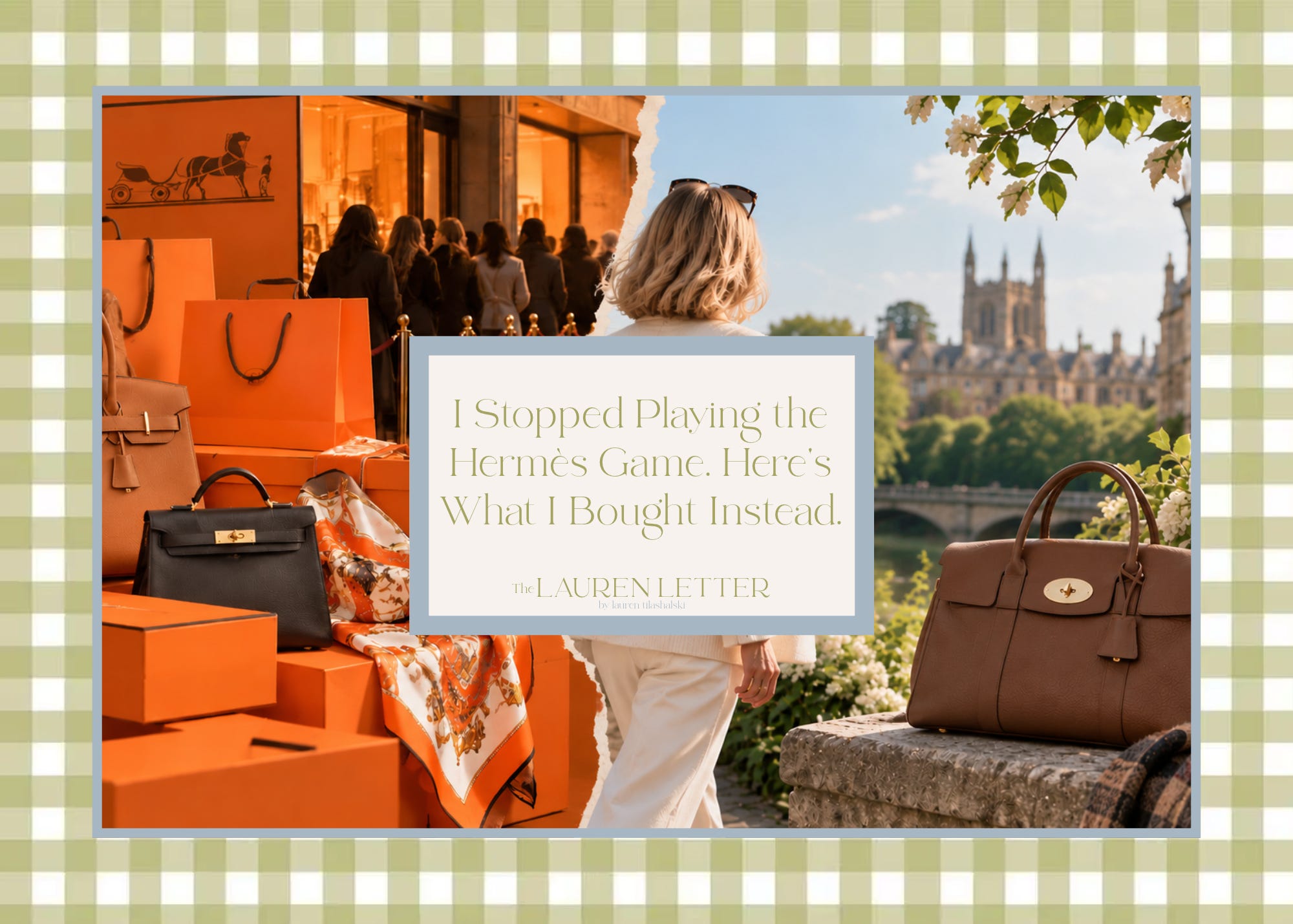
A few weeks ago, The Lauren Letter hit a milestone I’d been working toward for a long time. And when something like that comes to fruition, I believe in marking it with something you’ll still be carrying long after the champagne bubbles have dissipated.
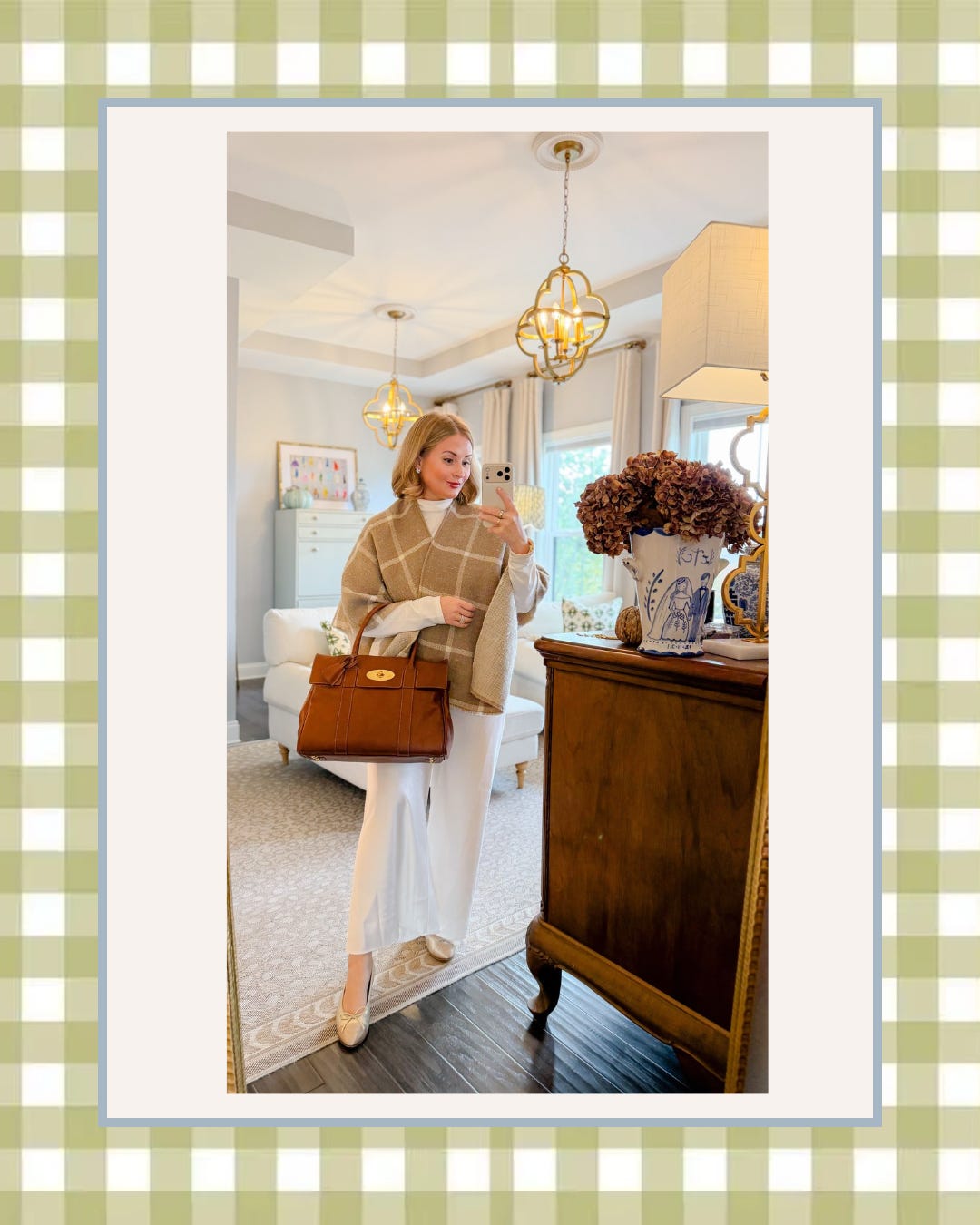
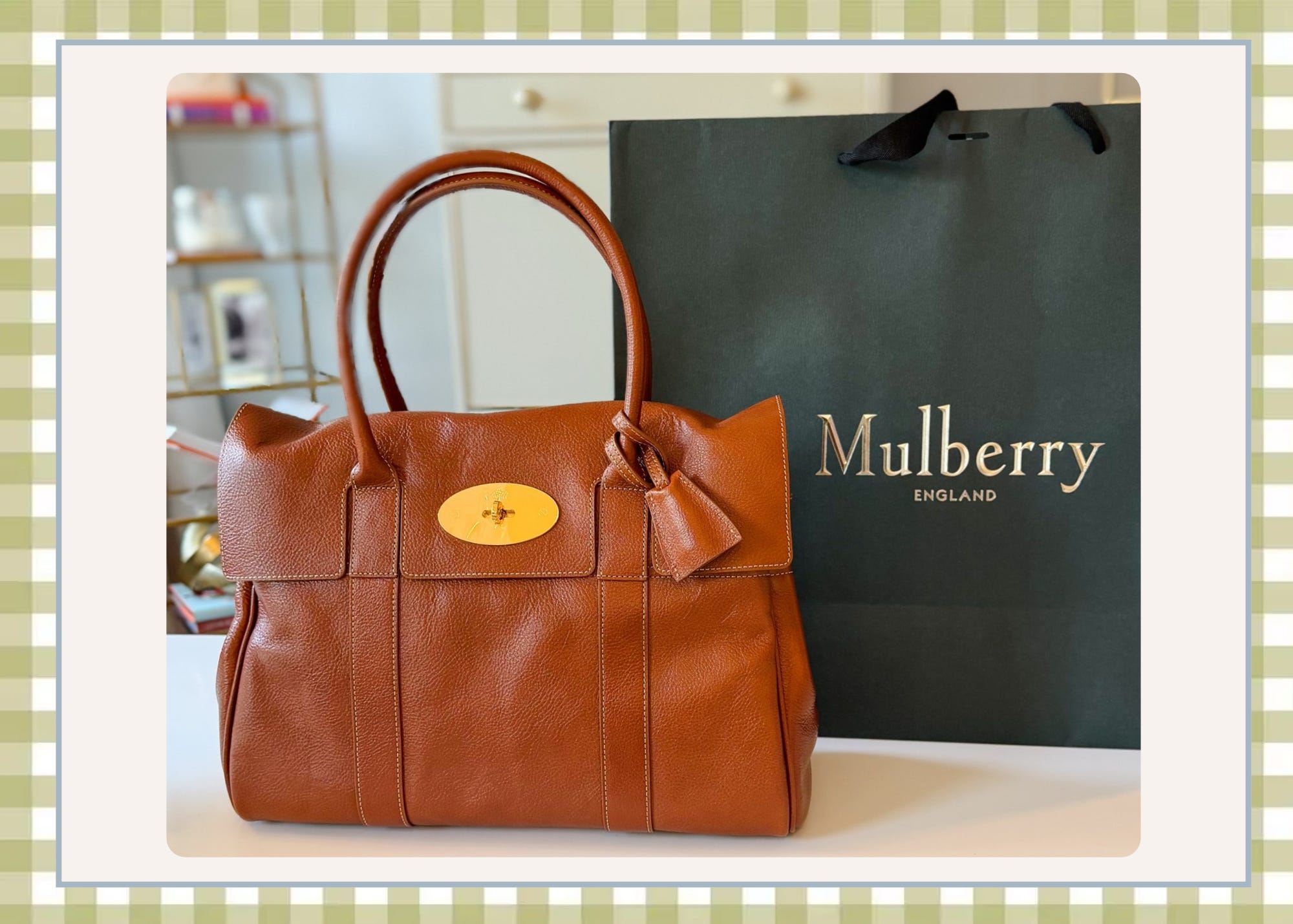
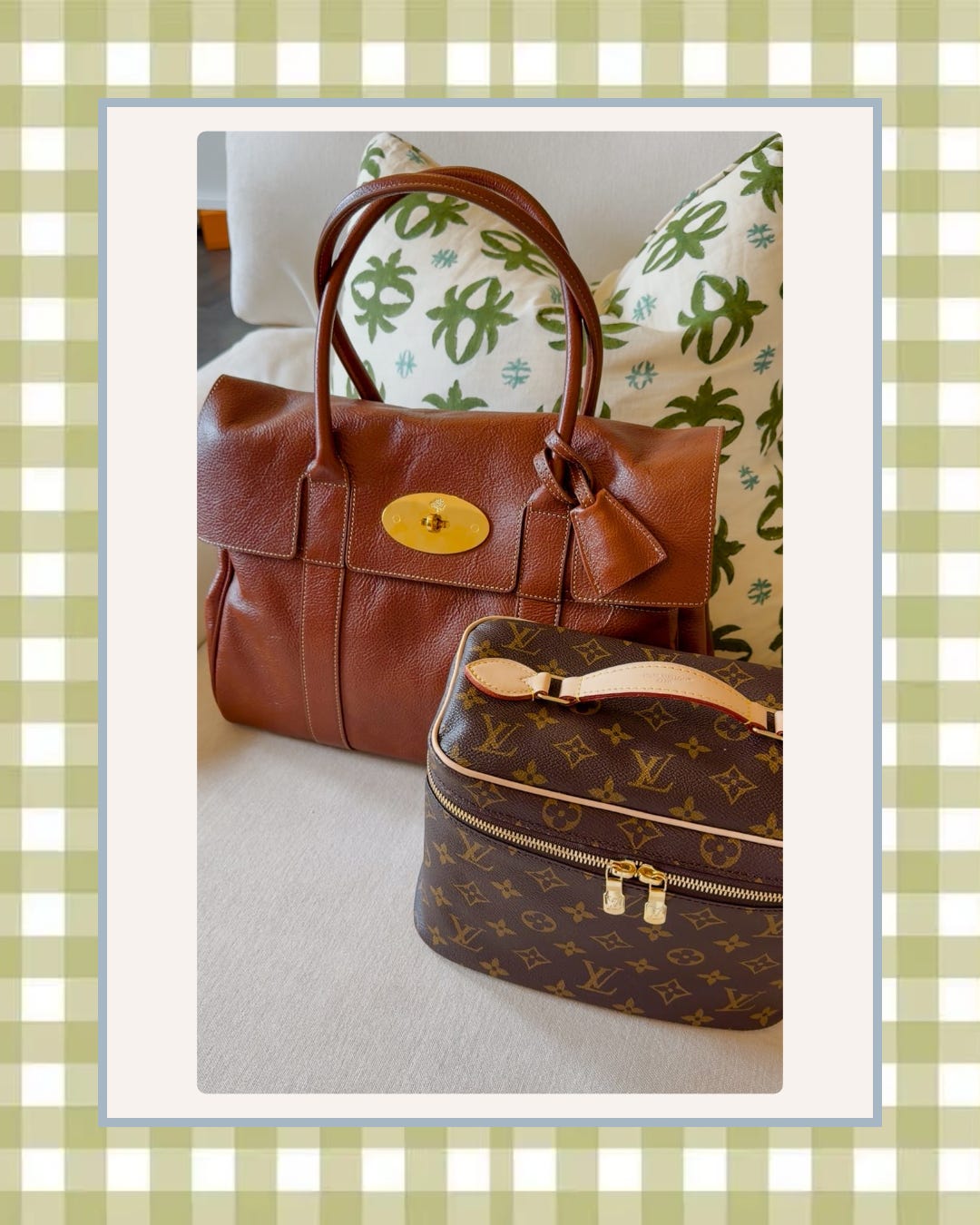
So, I finally bought the tote I’d been admiring for ages. It isn’t orange-boxed. It didn’t require a waitlist, a relationship-building strategy, or purchase after purchase that I didn’t really want. It’s a Mulberry Bayswater, and I think it might be the most considered, luxurious purchase I’ve ever made.
Here’s how I got there.
The Lauren Letter will always be free. But if this space has become something you look forward to—a small ritual in your week, a source of inspiration, a reminder to approach life with more intention—you now have the option to support it.
I Used to Play the Hermès Game
I’ll be candid: I was in it. Not because of the status (or not only because of the status), but because I genuinely revere Hermès craftsmanship. A Birkin is made start to finish by a single artisan, saddle-stitched by hand, from a house that began as a Paris harness workshop in 1837.
But if you’ve ever tried to buy one, you know the store isn’t really selling the bag. It’s selling access to the bag.
Birkins and Kellys are “quota bags,” offered only to clients with an extensive purchase history. Hermès has never published a formula, but shoppers and former employees describe a spend ratio: a former Hermès employee told Fortune she had to spend roughly the bag’s price on other Hermès goods first. Resellers report that ratio has crept to 1.5-to-1 or higher at some boutiques. The practice is even the subject of a proposed class action filed in San Francisco in 2024, alleging that tying Birkin access to other purchases violates antitrust law.
The British Birkin
Then I watched Lydia Millen, one of the UK’s original luxury creators and the source of my favorite long-form comfort content, do something I didn’t expect. In March 2025 she announced she was selling her entire handbag collection, estimated at roughly 75 bags including Birkins, Kellys, and Chanel, and cited safety as a key reason. Touting a five-figure bag through a city had started to feel like carrying a target to her, and she no longer could keep her collection at home, instead having to store them off site at a bank.
And what took the place on the crook of her arm? A vintage Mulberry Bayswater, which she nicknamed the “British Birkin.”
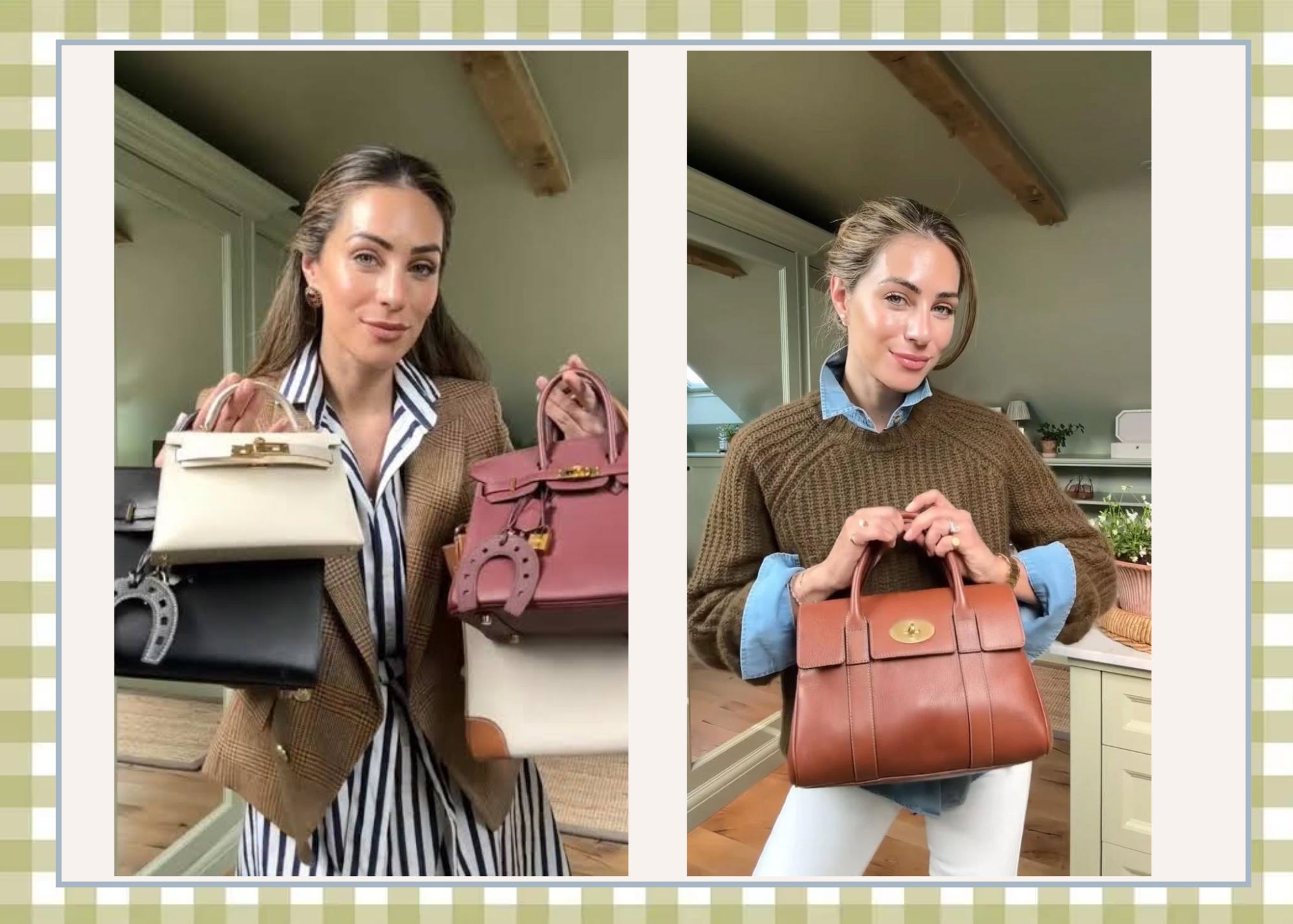
And what took the place on the crook of her arm? A vintage Mulberry Bayswater, which she nicknamed the “British Birkin.”
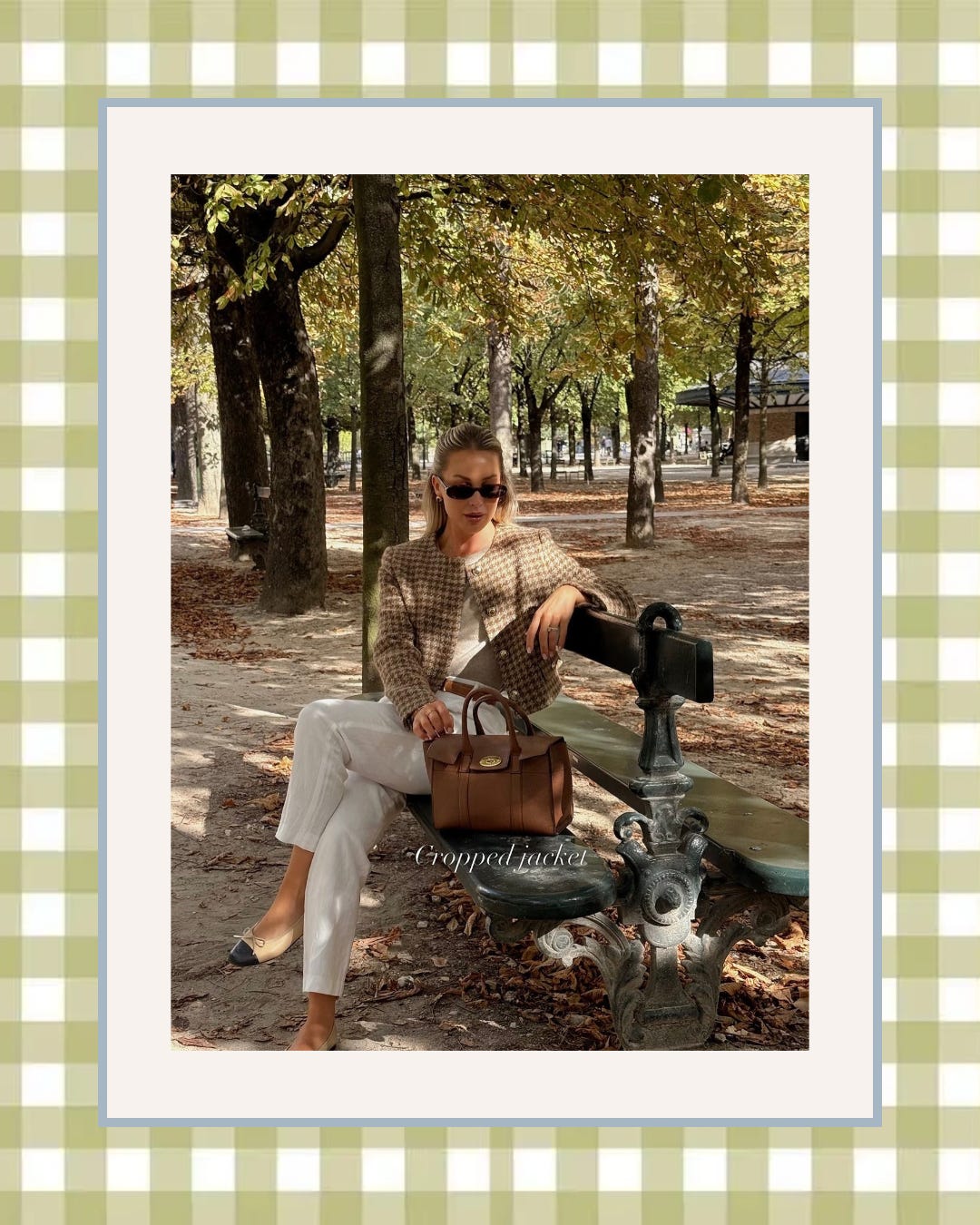
Something clicked. Here was a woman who had owned every bag I’d ever coveted, and she chose a Somerset-made leather bag with no waitlist and no logo shouting from across the room. Once Lydia introduced me to the brand, I began to notice it on the arms of so many British women whose style I admire: Laura Byrnes, Chloe Rose Litras, and Laura-Ann Barr (note: she’s Irish!), just to name a few.
How I Fell for Mulberry
The more I researched the brand, the harder I fell.
Mulberry was founded in 1971 by Roger Saul and his mother, Joan. Roger came by leather organically: his father ran the local Clarks shoe factory, and his early collections drew on saddlery leather, quilted fishing bags and poacher jackets. It was English country life, made at a family kitchen table, and translated for town.
As demand grew, the family opened The Rookery, a factory in Chilcompton, about 13 miles south of Bath. A second Somerset factory, The Willows in Bridgwater, followed in 2013–2014. Mulberry now calls itself the largest manufacturer of luxury leather goods in the UK, with around 600 craftspeople. The Bayswater, its icon, turned 20 in 2023.
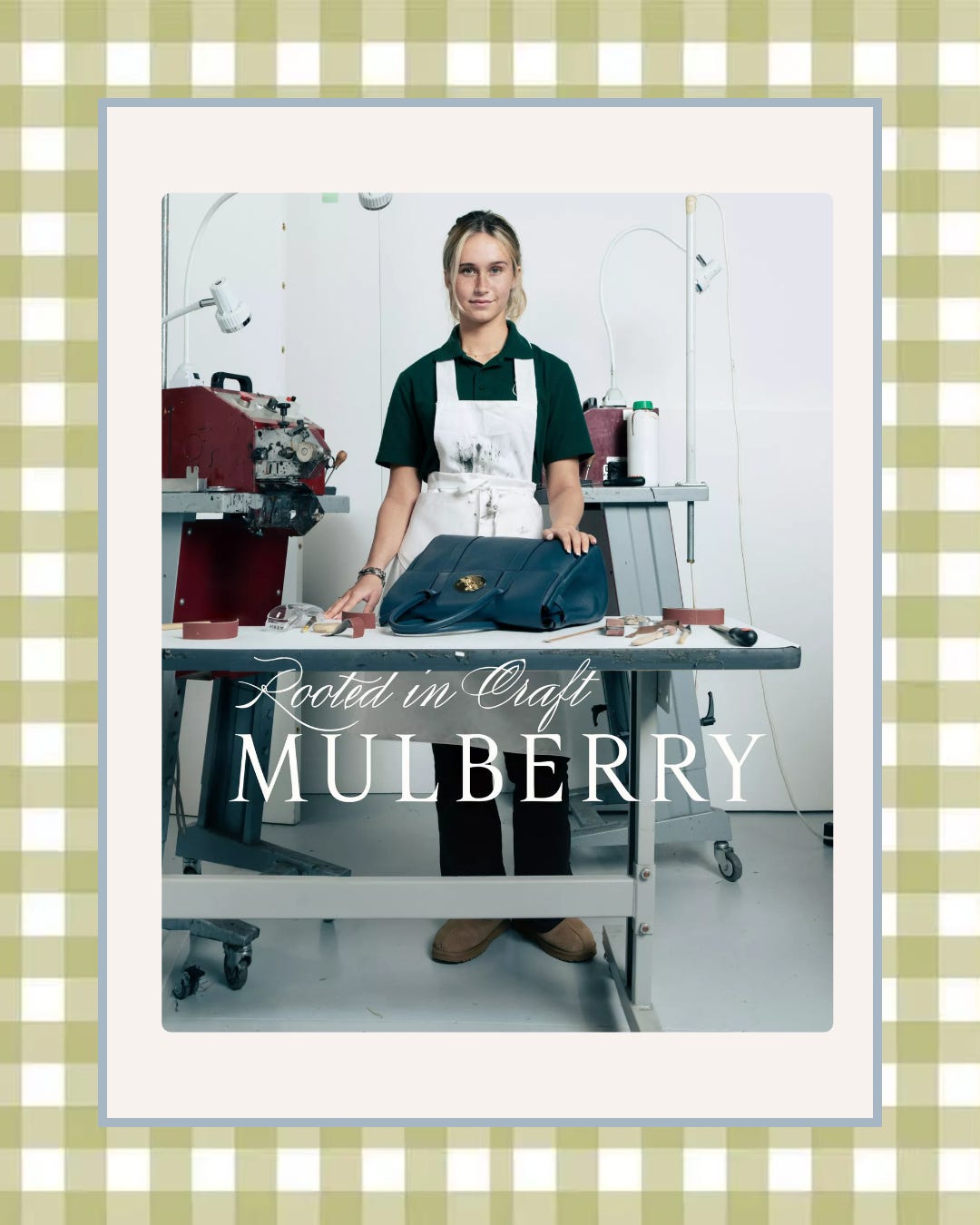
How the Bags Are Made
What moved me wasn’t the heritage alone – it’s how the company treats the people and materials behind it.
Made in England. Mulberry has committed to making more than half its products in its two Somerset factories.
Paid fairly. Every person working in those factories is paid a real Living Wage, and the factories are carbon neutral.
Trained by hand. Apprentices are trained in-house; one Mulberry leader started at The Rookery as a trainee stitcher making Bayswaters.
Built to be repaired. The Rookery’s repair team restores close to 10,000 bags a year, and the Mulberry Exchange lets you trade in old bags for credit.
Independently certified. Mulberry became a certified B Corp in 2024, assessed on workers, community, environment, governance and customers.
This is a brand that designs bags to be cherished and handed down, not swapped in and out as status symbols evolve (see Gucci Marmont belts).
The Math Stopped Making Sense
Could I have kept building a profile and eventually been offered a quota bag at Hermès? Maybe. And yes, Birkins hold their value as true investments. But the spend-to-offer ratio has ballooned past what I can justify.
In January 2026 the Birkin 25 in Togo rose to $13,500 in the US, up 6.3% in a single year. Fashionphile tracked the same bag at $9,400 in 2016, a 44% climb in a decade. PurseBop notes these increases outpace inflation, which suggests they aren’t driven by production costs. Add a 1-to-1 pre-spend and the real cost of one bag starts to look like this:
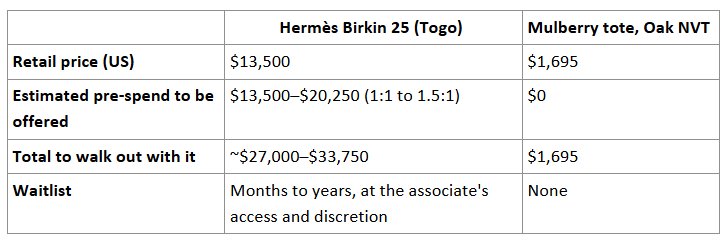
That's not to say I don't still adore other Hermès pieces: My Picotin is genuinely one of the most beautiful things I own, you can find me in my many pairs of Orans all summer long, and the French house's signature silks make my heart just flutter. But, I have committed to myself that any and all purchases from Hermès must be independently desired, with no tether to the hope of a future buy. And, better yet if I can score vintage selections!
And Logo Bags?
Don't get me started on some of the mega-brand classics. Louis Vuitton's famous Neverfull, for example, is not leather at all: it's cotton sealed under a PVC coating, trimmed in cowhide. It's durable, and I understand why people love it. But I want my money to buy organic materials when at all possible, not plastic.
Fair Market for Real Craft
At $1,695, my Mulberry Bayswater is unquestionably a luxury purchase. But I can see where the money goes: full-grain leather, a factory in Somerset, artisans earning a living wage, and a repair service that will keep it going for decades. That feels like paying fair market for quality, not a premium for permission.
The Bag Itself
I went with the tote in Oak NVT, Mulberry’s Legacy NVT leather, a renewed take on its most classic hide. Oak is the warm, saddle-brown color the brand is known for, and NVT is designed to soften and darken with age into a patina that is entirely your own. The contrast stitching gives it that sellier feel I always loved on Hermès, the visible, deliberate stitch that tells you a hand was here.
Every friend who has seen it in person has had the same reaction: a little gasp, then, “It looks so rich.”
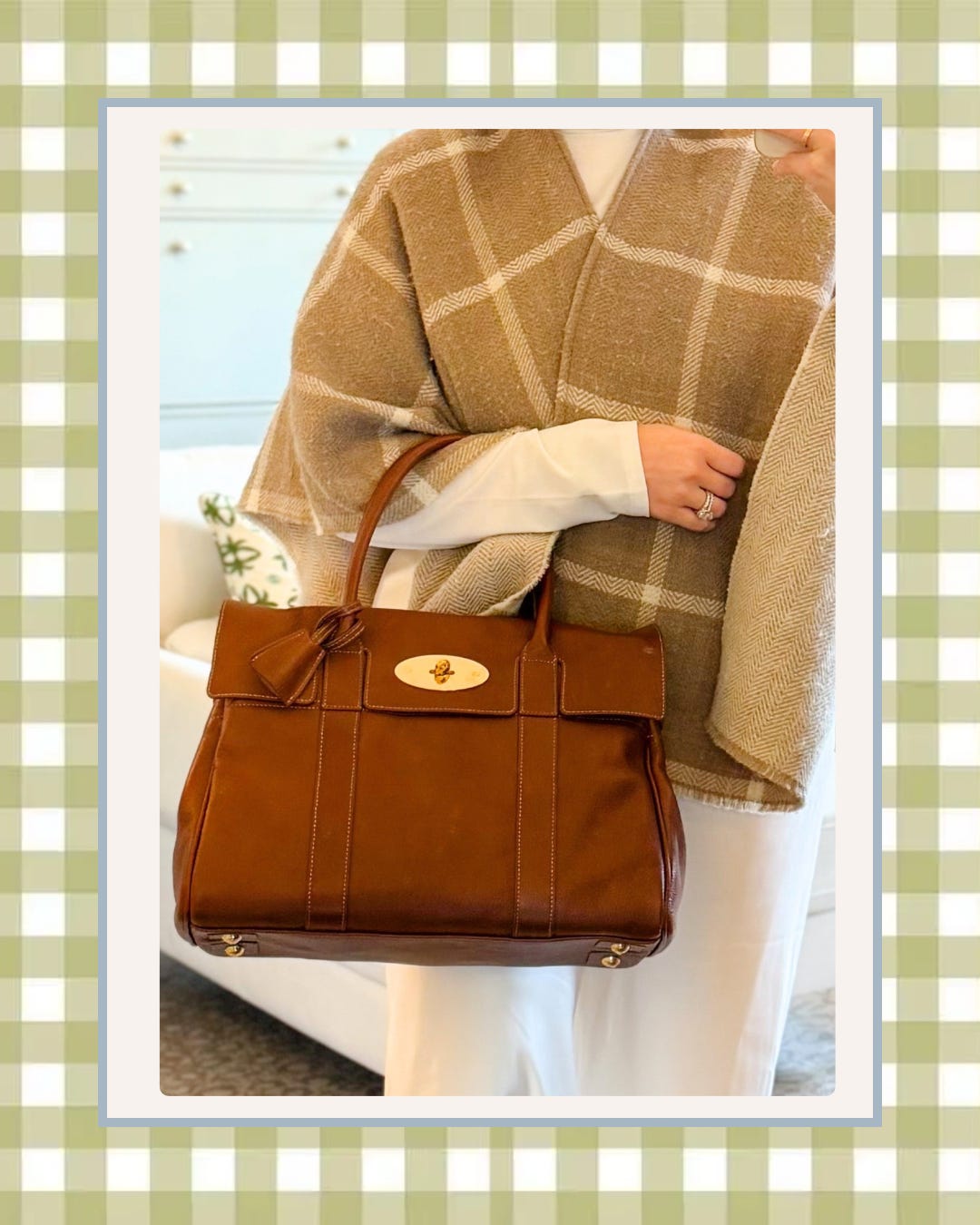
What It Signals
I’ll own it: this bag virtue-signals. But I mean nothing pejorative by that characterization because it truly personifies the things I hold near and dear to my heart:
Quality you can feel, in leather that gets better with use.
Sustainability, from a B Corp that repairs rather than replaces.
British heritage, which, as a card-carrying anglophile, I find irresistible.
Beauty that doesn’t need a logo to announce itself.
That’s a message I’m proud to carry.
Next Up: The Launer Juliet
My Mulberry Bayswater is my “ludicrously capacious” everyday bag, the one I schlep and tote through workdays, errands, and travel. But every wardrobe needs its counterpart: something smaller and more polished for events and fizzy appointments. For that, my next dream bag is already chosen: a Launer Juliet.
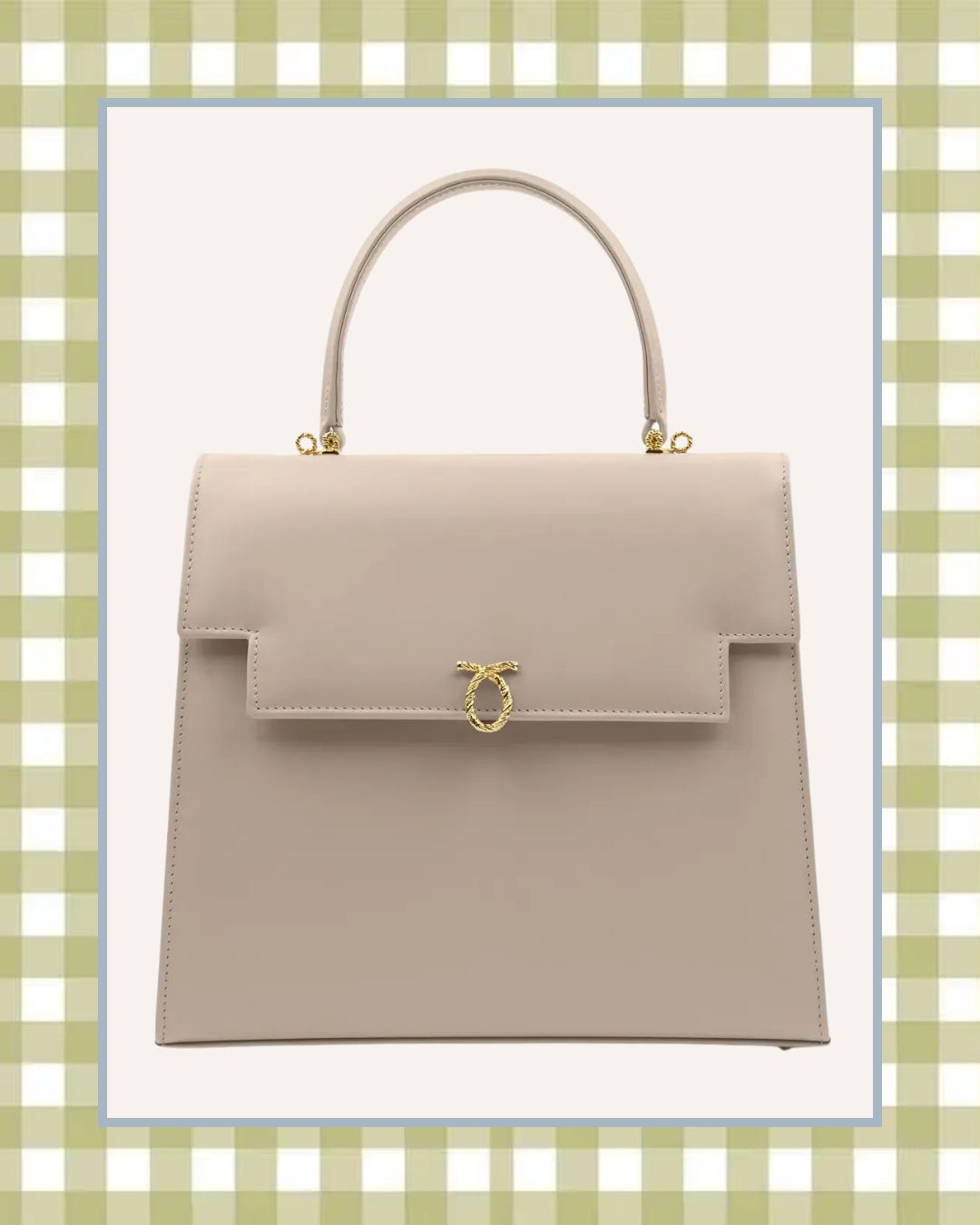
If Mulberry is the British Birkin, Launer is the British answer to the Kelly. Sam Launer founded the house in London in 1940. Queen Elizabeth the Queen Mother bought a Launer bag in the 1950s and later gave one to her daughter. Queen Elizabeth II carried Launer for some sixty years, and the brand has operated under a Royal Warrant from the Royal Household since 1968.
The making is what gets me. Since 1981, every Launer bag has been made by hand in a Grade II listed workshop in Walsall, in England’s West Midlands, a town with a long leatherworking tradition. A single craftsperson assembles each bag, which takes around eight hours, and many of the team have been there for years, some starting as apprentices. Every piece carries Launer’s signature twisted-rope emblem, which I find so darling.
The Juliet is one of the house’s structured top-handle styles, and it can be fully customized in your choice of leather, color and rope finish.
One milestone at a time! But I know what I’m working toward. And, now, the only quotas I need to meet before purchasing are my own!
P.S. I promise to always keep The Lauren Letter free as my little exercise of trying to make the world a bit more beautiful. If, in return, you could considering giving this post a “like” or share with a friend, it would just mean the world to me.