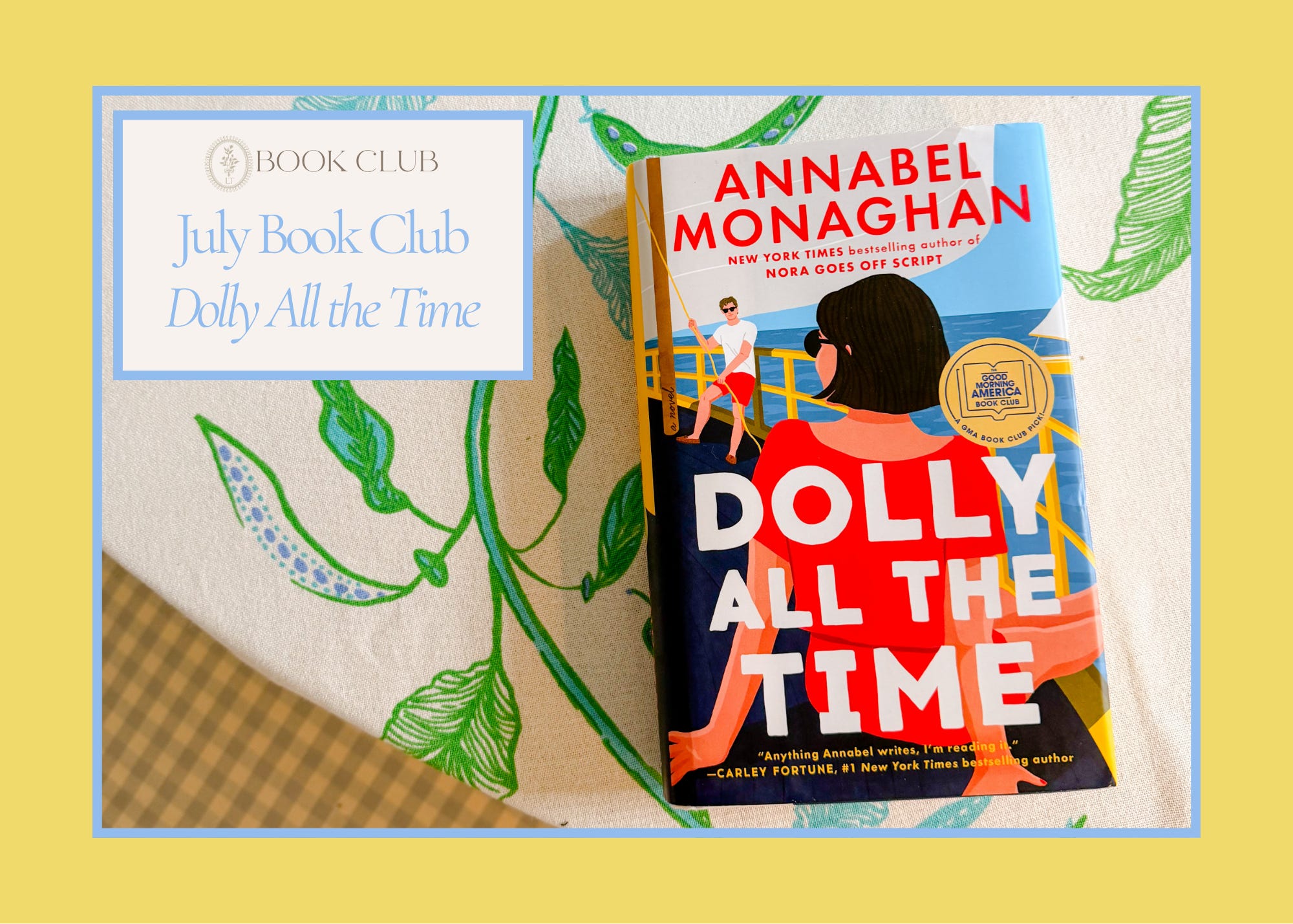
My Rating: ★★★★☆
I am not typically romance reader! I roll my eyes at most tropes on principle. And yet, I am sitting here, four stars deep, having genuinely surprised myself with how much I adored Dolly All the Time by Annabel Monaghan!
Reader beware — spoilers are ahead!
The Lauren Letter will always be free. But if this space has become something you look forward to—a small ritual in your week, a source of inspiration, a reminder to approach life with more intention—you now have the option to support it.
The Book
Dolly Brick is thirty-nine, a single mom to her thirteen-year-old son Gus, and has spent her whole life being the one who fixes things — for her family, for Gus, for herself. Her own mother left when Dolly was twelve. Gus’s father left not long after he arrived. So when Dolly moves back to her hometown of Whitfield, Rhode Island for the summer to help keep her dad and brother afloat, self-sufficiency isn’t a personality trait — it’s survival.
Enter Stewart Whitfield: the golden-boy heir to the wealthy family the entire town is named after, who Dolly finds stranded with a flat tire on the same day he’s coming off a very public, very humiliating breakup. Ever the fixer, she helps him. He, in turn, offers her a deal — pretend to be his girlfriend for the summer, in front of his family and the society pages, and he’ll cover the money she desperately needs to fix her dad’s roof.
What starts as a transaction does exactly what you’d expect it to do: public dinners turn into sunset boat rides, the pretense turns into something real, and Dolly — who has never let herself rely on a single soul — has to decide whether she’s willing to let that change.
Book Club Discussions
I keep coming back to the fact that Dolly’s mom and Autumn — two hugely influential characters — never once appear in person in the book. I’ll admit I was itching for an actual confrontation with both of them. But I think that’s exactly the point: the book was never interested in them as characters in their own right. It was interested in what their absence built in everyone left behind.
That question feeds into a bigger one for me — has Dolly actually learned to let herself be taken care of by the end of the summer, or has she just found a partner who shares the load? I think it’s a fine distinction, but a real one. Dolly never shirks a single responsibility at any point in this book. What she gains isn’t relief from the weight — it’s someone who can help her keep the plates spinning.
Stewart, meanwhile, carries the burden of being heir presumptive to his family’s expectations, and I found myself less sympathetic to his version of it than to Dolly’s — he placed a lot of that burden on himself, where a lot of hers was circumstance thrust upon her without her consent. Stewart reminds me of the old line about how people in therapy so often end up there to talk about the people who won’t go to therapy themselves. :)
Then there’s the Gus of it all. Dolly tells him the relationship is pretend from the start, and I go back and forth on whether that was the right call, or whether she should have shielded him from the arrangement entirely. I have to imagine a single mother and her only child develop a bond where the lines blur more than they would in a traditional nuclear family, out of both necessity and emotional intimacy. That said, I think this particular arrangement could be genuinely confusing for even a teenager to parse — and I wonder if it risks sending a thirteen-year-old boy the wrong signal that a woman’s time (and attention) can simply be bought.
Want to participate in the book club discussion? It’s never too late! Keep the conversation going in the July Book Club Note below.
On Being a Reluctant Romance Reader
As I noted, I am not typically a romance reader and often roll my eyes at classic tropes, such as the fake-dating premise. I hate that I can see the mechanics and I know where it’s going.
But somewhere in the sails off the Rhode Island coast, I stopped resisting. I think it’s because Monaghan never asks the trope to do the emotional work by itself — Dolly’s exhaustion, her hard-won self-sufficiency, the specific ache of having been the fixer since she was twelve years old, all of that is doing the real lifting underneath the fun premise. The trope is the delivery mechanism, not the substance.
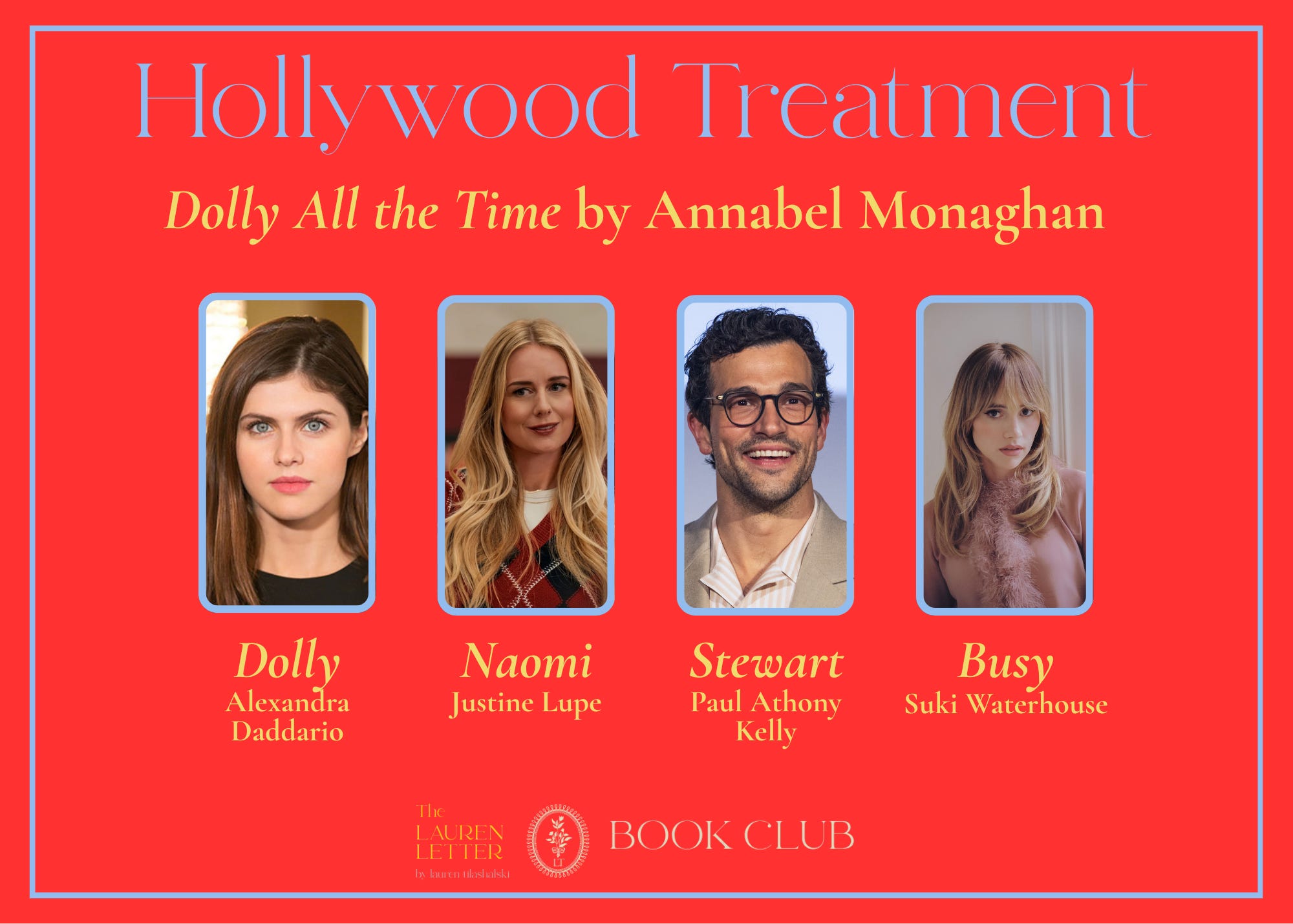
If You Liked Dolly All the Time, May I Recommend:
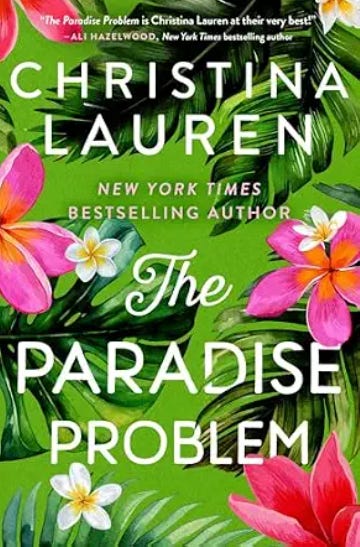
The Paradise Problem by Christina Lauren
If what won you over was watching a fake arrangement between two guarded, competent people turn real — with a wealthy family, a bit of high-society pressure, and genuine warmth running underneath all of it — this is your next stop!
August Book Club: Whistler by Ann Patchett

August’s selection for The Lauren Letter Book Club has taken over book culture entirely (Obama is reading it, for heaven’s sake!): Whistler by Ann Patchett.
Her tenth novel follows a woman in her fifties who has a chance reunion at the Met with the stepfather she hasn’t seen in decades, and the two revisit the accident that once bonded — and separated — them. Gentle, literary, and already being called one of the best books of the year!
P.S. The hardcover is 50% off right now!
P.S. I promise to always keep The Lauren Letter free as my little exercise of trying to make the world a bit more beautiful. If, in return, you could considering giving this post a “like” or share with a friend, it would just mean the world to me.