


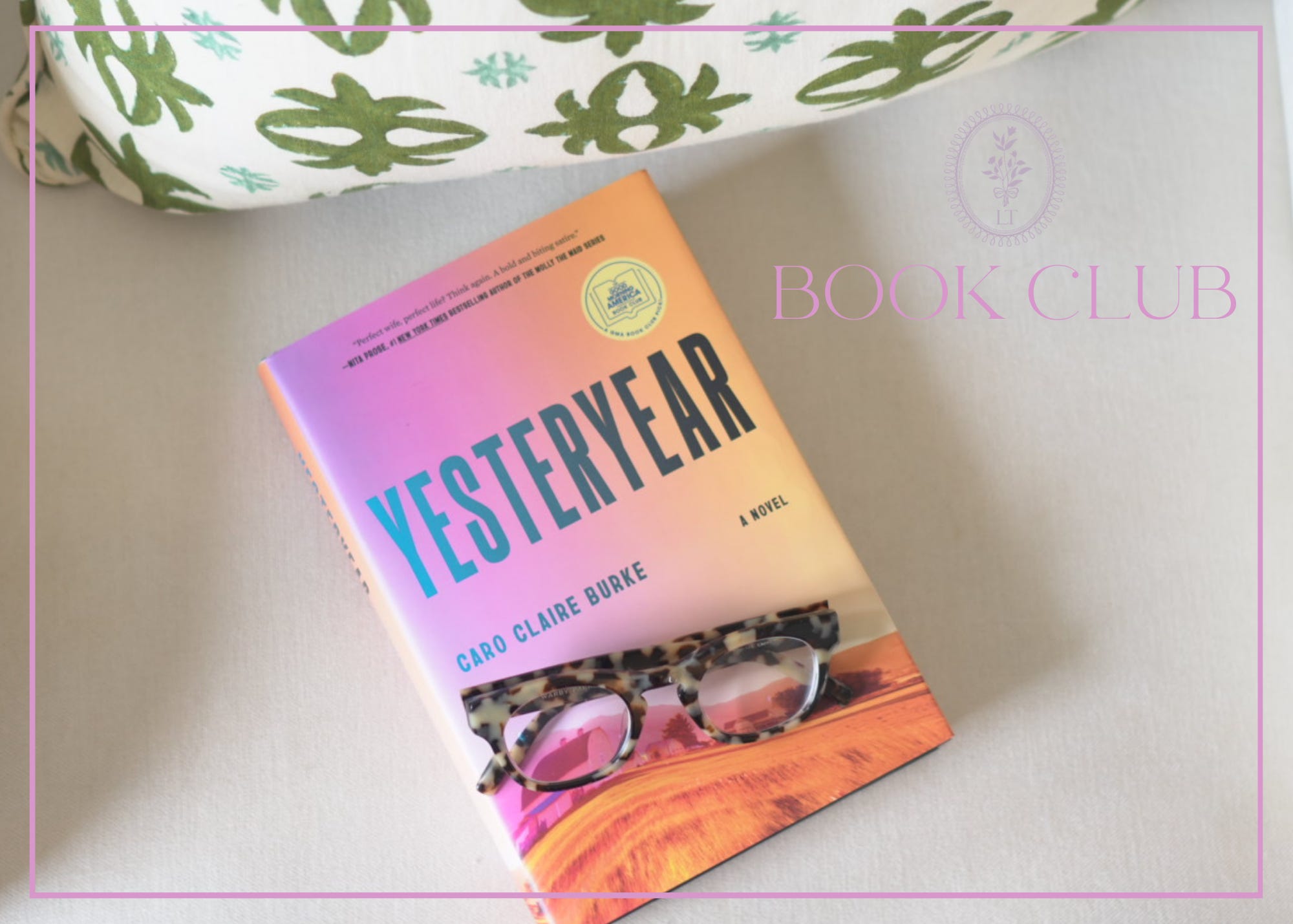
My Rating: ★★★★★
Yesteryear by Caro Claire Burke is the kind of novel that announces exactly what it is from page one — sharp, unsettling, and not particularly interested in letting you off the hook — and somehow still manages to gut you by the end. I am a fantastically frugal reader who never buys books.
Buy this book.
Reader beware — spoilers are ahead!
The Book
When I first read the premise, I braced for something flat — a tidy pan on tradwives, every reader closing the cover feeling correct about her politics and clean about her judgment.
That is not what this is.
Burke gives her narrator Natalie Heller Mills — a Christian tradwife influencer with millions of followers — enough room to be observant, funny, and alarmingly, more often than I was prepared for, correct. She is not a cartoon villain. She is something more dangerous: a woman who is very, very good at reading a room.
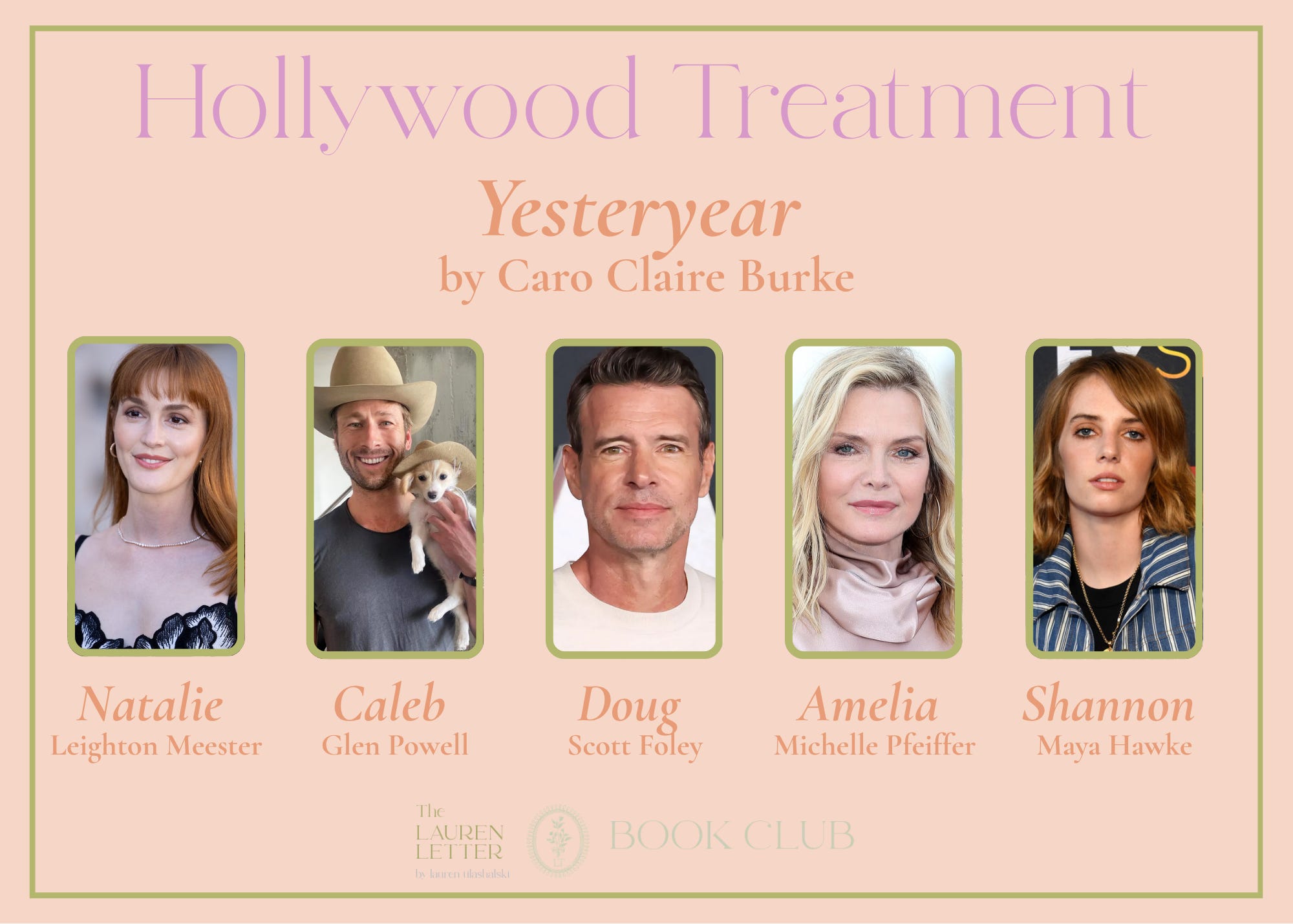
Natalie has the brand deals, the nannies, the young producer Shannon documenting her supposedly effortless life. She is, by every metric the internet has invented, winning. Then she wakes up in 1855 — no phone, four children in homespun clothing calling her Mama, and a man who looks like a harder, older version of her husband ordering her inside.
The novel alternates between the disoriented 1855 present and the backstory of how the empire was built and how it came apart: a useless charming husband, a senator father-in-law with deeply sinister fine print, and Shannon — who eventually goes on television to expose Natalie not just as a fraud but as someone who assaulted her. The twist, when it arrives, is earned and devastating: Natalie and Caleb built the pioneer world themselves. After the scandal destroyed everything, they stripped the ranch of all modernity and raised their youngest children in a fabricated nineteenth-century homestead — and over the years, Natalie’s mind fractured until she genuinely forgot she had built her own prison.
Book Club Discussions
The Twist
Paige didn’t see it coming and found a poetic justice in the psychotic break — though she’d been half-expecting Doug to have stowed Natalie in 1855 to clean up his mess, which is very royal family x Diana conspiracy (and I, of course, adore).
Sable Massingill Martinez also suspected modern exile at Doug’s hand and felt the reveal came twenty or thirty pages too late. I, too, felt the ending was a titch too rushed and tidy, breaking from the cadence of the rest of the novel.
Lauren Miracle had sensed something was off from the moment Natalie arrived in 1855 with no memory of how she got there — no stones to touch à la Outlander — and suspected a mental institution reveal. When the truth landed, she was still in awe of how thoroughly Natalie had treated her own children as props.
My favorite related thread: I asked what it says about Natalie — and about all of us — that her first theory upon waking in 1855 is that she’s being filmed. Surveillance felt more plausible to her than anything supernatural. Karena Acard had the answer: it was Natalie’s mother who told her to always pretend she was being watched, and her belief that God was always watching primed her perfectly to live in front of a camera. The performance didn’t start with Instagram. It started in the Church.
The Shannon Of It All
Shannon’s television interview, the assault allegation, what Natalie’s narration can and cannot name — was our most divided conversation.
Karena Acard wasn’t ready to let Shannon fully off the hook, noting that Shannon cosplayed as underprivileged and innocent and asking the pointed question: how did Natalie not have her sign an NDA?
Paige read Shannon’s testimony as possibly shaped and amplified by her team — and since Natalie blacks out frequently and her narration can’t name what she did, Paige suspects something even more damning may be buried under the psychotic break.
I believe this is a larger allegory of what social media is: we only see the parts of the stories the creator wants us to see. Unsavory or undesired facts can be neatly hidden away from the phone’s camera — even from the creator’s own consciousness, it appears.
The Grocery Bagger Irony
An irony I keep returning to: early in the novel, Natalie is ashamed her sister became a grocery bagger — she sees it as the ultimate failure, the life that proves you didn’t try hard enough, didn’t want it badly enough, didn’t perform well enough. By the end, Natalie’s own daughter Mary is a grocery bagger, as a direct result of the childhood Natalie engineered for her. The thing she feared most, she manufactured herself. Burke doesn’t underline it; she just tosses it out there. But it landed like a stone on a smooth lake to me.
The Indictment
When I asked who the book was really indicting, the conversation went somewhere more interesting than I expected. Because the honest answer isn’t just Natalie, and it isn’t just the audience that made her — it’s the false war we’ve been fighting for decades between the tradwife and the working woman, as though these are opposing tribes rather than two expressions of the same impossible pressure.
Paige put it perfectly: the tradwife/angry woman Venn diagram is more of a circle than the characters think. Both are unhappy, unfulfilled, overwhelmed, trying to meet expectations that were never designed to be met. Both are, in her words, key offenders of girl-on-girl crime. The women in Natalie’s Harvard cohort who rolled their eyes at domesticity weren’t free — they were just performing a different kind of correctness. Natalie, performing the opposite, wasn’t free either. Neither camp is the enemy. Both are exhausted. Both are watching the other and wondering if they chose wrong. Veer too far toward either extreme, Paige said, and you’ll literally lose your mind.
Burke never states this thesis outright. She just builds two timelines, populates them with women making impossible choices, and lets you arrive there yourself.
Want to participate in the book club discussion? It’s never too late! Keep the conversation going in The Lauren Letter Book Club May Note below!
On Reading This as Someone Who Lives Online
There is an undercurrent to reading Yesteryear as an online creator that I didn’t anticipate, and I think it’s worth naming. It’s the discomfort of looking into one of those mirrors that flips your reflection around. Still you — but something is wrong, and you can’t quite shake it.
Natalie is not a character I recognize in myself. But the mechanics of what she built — the careful curation, the gap between the woman on screen and the woman off it, the way the audience becomes both your product and your captor — those I can recognize acutely in the influencer space. What this book asks, with a very sharp knife, is what happens when the performance outlasts the performer’s belief in it. When you’ve posted so many mornings that you can no longer tell if you love them, or if you’ve just loved how they looked in the light.
That question doesn’t belong only to tradwives!!!
If You Liked Yesteryear, May I Recommend:
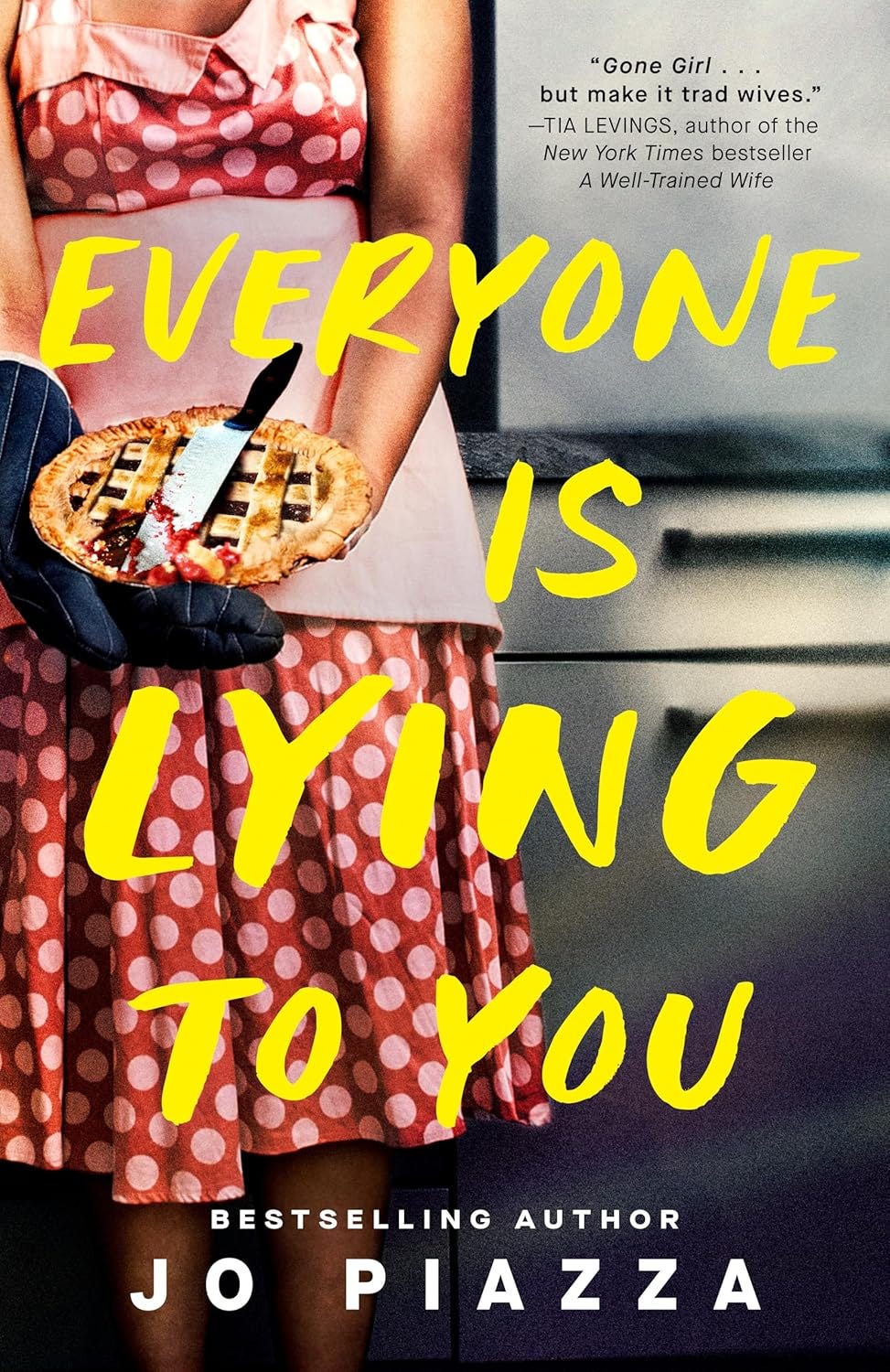
Everyone Is Lying to You by Jo Piazza
If Yesteryear cracked something open about the distance between the life we sell and the life we live, this walks directly into that fissure. Same nerve, different form.
June Book Club: Cast Your Vote!
Famesick by Lena Dunham A memoir tracing Dunham’s rise from Girls to the present, asking the question she spent a decade trying to answer: what has the cost of fulfilling her dreams really been, and was it worth it?
Into the Blue by Emma Brodie A decade-spanning love story set against the world of improvisational theater, following two people whose connection refuses to resolve itself neatly across years of bad timing and longing. A Reese’s Book Club pick.
June Baby by Shannon Garvey A debut novel set on Block Island, following Ruth — sent to the island at seventeen after her mother’s death — who must now reckon, years later, with the first love and life she left behind there. Beach book with more depth than romance, salt air, and gorgeous prose.
P.S. I promise to always keep The Lauren Letter free as my little exercise of trying to make the world a bit more beautiful. If, in return, you could considering giving this post a “like” or share with a friend, it would just mean the world to me.
This was so fun to read even though I was too late to participate (thoroughly agree with all the sharp observations above!). Just started June Baby!
This was so fun!!